
Sabri Mahir was born in 1890 in Samsun, near the Black Sea, in the Ottoman Empire. His father was Mahir Bey, one of the judges of Diyarbakır Court of Appeal. In 1904, Mahir started school at Mekteb-i Sultani under the number 840. He took lessons in French literature with Monsieur Goury. He was among the first players on the Galatasaray football (known in U.S. English as “soccer”) team. During the 1908-1909 season, the Galatasaray football club became the champion of the Constantinople (Istanbul) Football League. It was the first Turkish team to win the British cup. Mahir became the first Turkish football player to play abroad and was also among the first Turkish boxers and boxing coaches.
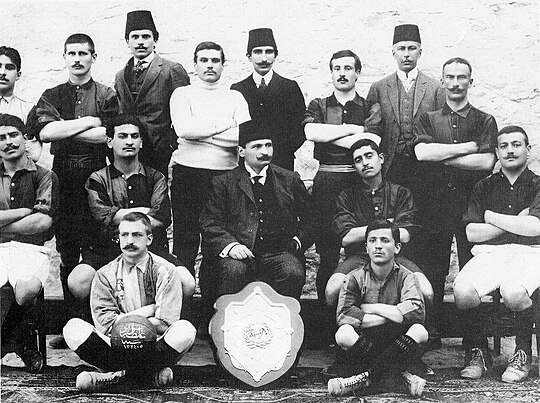

In 1910, an incident occurred that led to Mahir’s departure from the Ottoman Empire. During a match between Galatasaray and the Strugglers, a Greek football team, Mahir was accused of manhandling the opposing team players. The Istanbul government held Tevfik Fikret, the principal of the high school, responsible for the incident and dismissed him. The students, with Sabri Mahir at the head, protested. He and his friend Mahmud Celâl Yalnız (1886-1962, an intellectual known as “Bearded Celâl,” who was at that time Fikret’s teaching assistant) held the gates to prevent students from entering the school for eight days. While the police searched for Mahir, he stowed away on a French ship at the Galata docks, headed for France. There, he enrolled in the Racing Paris Club and continued to play football there. He and his club became champions of Paris in 1911. He continued to receive assistance from his high school teachers Monsieurs Goury and Raval.
Mahir started boxing through the sponsorship of an Egyptian prince. When he came second in amateur boxing, he decided to start to box professionally. On June 24, 1911, he fought his first professional match and continued as a professional until 1925. He played matches in France, England, and Spain and also taught gymnastics at Oxford University.
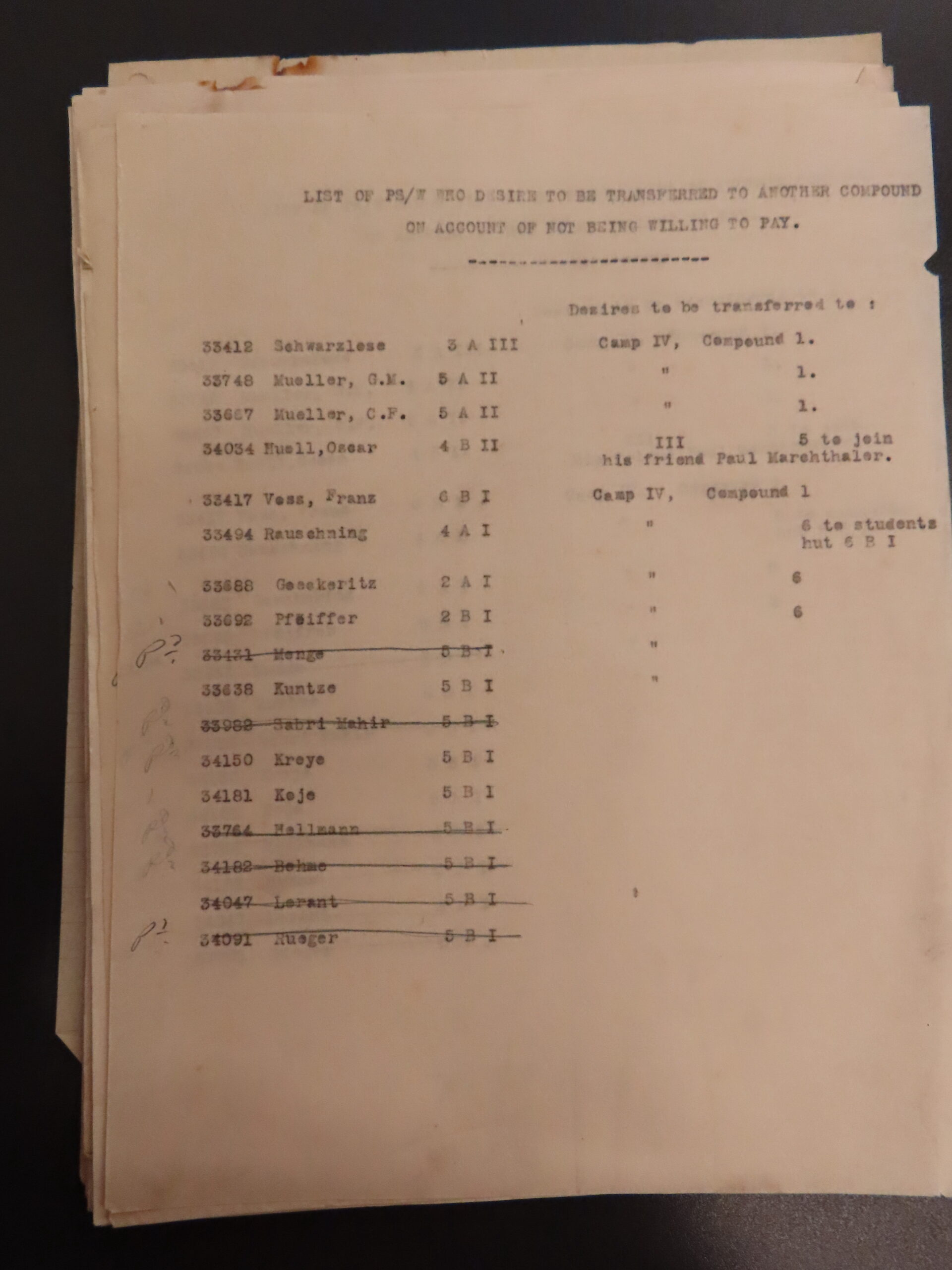
During World War I, Mahir was taken prisoner as a subject of the enemy Ottoman Empire and was imprisoned off the coast of England. He was among a handful of Ottoman inmates, most of them Muslim and Jews, confined in the Knockaloe Alien Detention Camp on the Isle of Man. He appears on an undated list of prisoners willing to pay for the privilege of being transferred to a compound with better living conditions (Camp IV, Compound 6). Since his name is crossed out, it is possible that he was released before transfer.
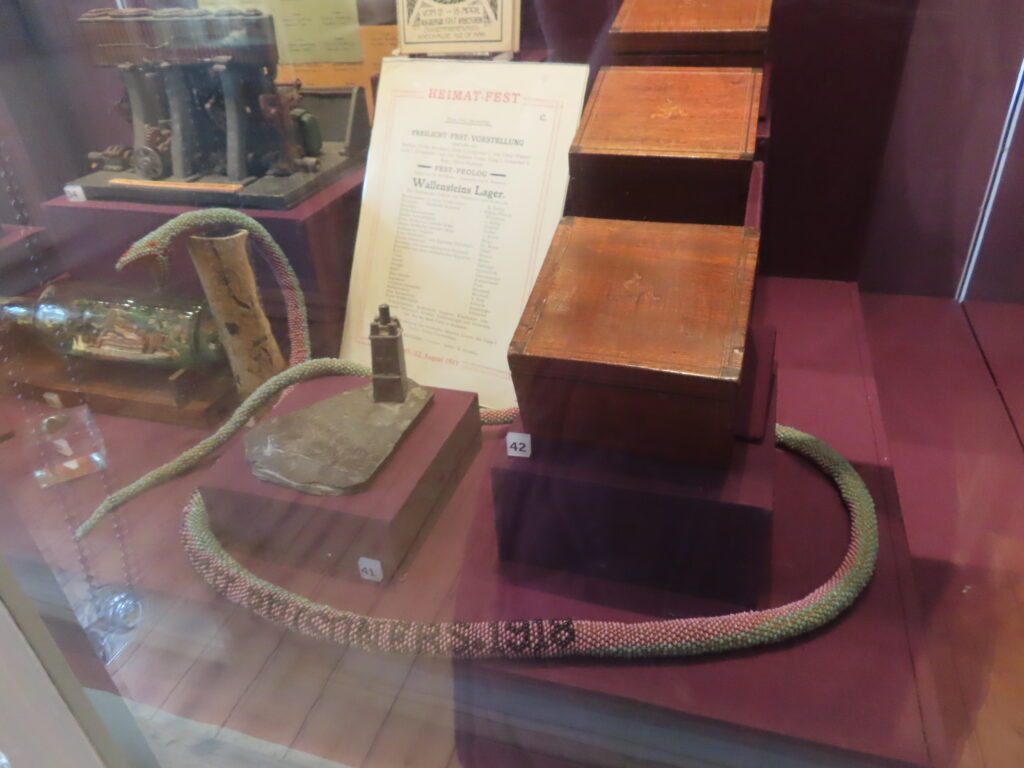
Mahir would have been among the detainees who petitioned prison authorities in 1917 for a special food allowance for iftar (إفطار), the break-fast meal consumed during the evenings of the month-long Muslim holiday of Ramadan, which that year began on Wednesday, June 20. These six men were given a total of six ounces of rice, four ounces of beans, two ounces of butter, one ounce of sugar, five ounces of onions, and seven ounces of flour. Had Mahir remained a prisoner through the end of World War I, he would have participated in the crafting of a beaded snake with the words “Turkish Prisoners 1918” patterned on its back, on display at the Knockaloe Visitor Center, Isle of Man.
After three years in prison, Mahir was released to Germany along with other Turkish prisoners of war. In Berlin, Mahir opened a boxing studio and trained famous German boxers, including Max Schmeling and Franz Diener. He was known in Germany by the nicknames “the terrible Turk Sabri Mahir” (der schreckliche Türke Sabri Mahir) and “the one who fought against four men” (der gegen vier Männer kämpft).
A U.S. promoter named Kidd Jackson brought Sabri Mahir to Spain. In the championship held at the Fiorinten Centrale hall, Mahir faced the Champion of Spain, with the king of Spain among the spectators. Mahir knocked out his opponent in the third round, stunning the audience. The Spanish boxer was taken on a stretcher to the dressing room. The King of Spain congratulated Sabri Mahir, but the incident led to the banning of boxing in Spain.
Unable to find refuge in Germany during the Second World War, Sabri Mahir moved to France, where he worked as a translator at the Turkish Embassy in Paris, with the support of Rasih Minkari, another Galatasaray player. At the end of the war, Mahir moved back to Berlin, where he died in 1980.
This biography (with the exception of details on Mahir’s detention on the Isle of Man), is derived from https://tr.wikipedia.org/wiki/Sabri_Mahir and https://mbbmarmaralife.wordpress.com/2020/01/24/bir-osmanli-filozofu-sakalli-celal/.